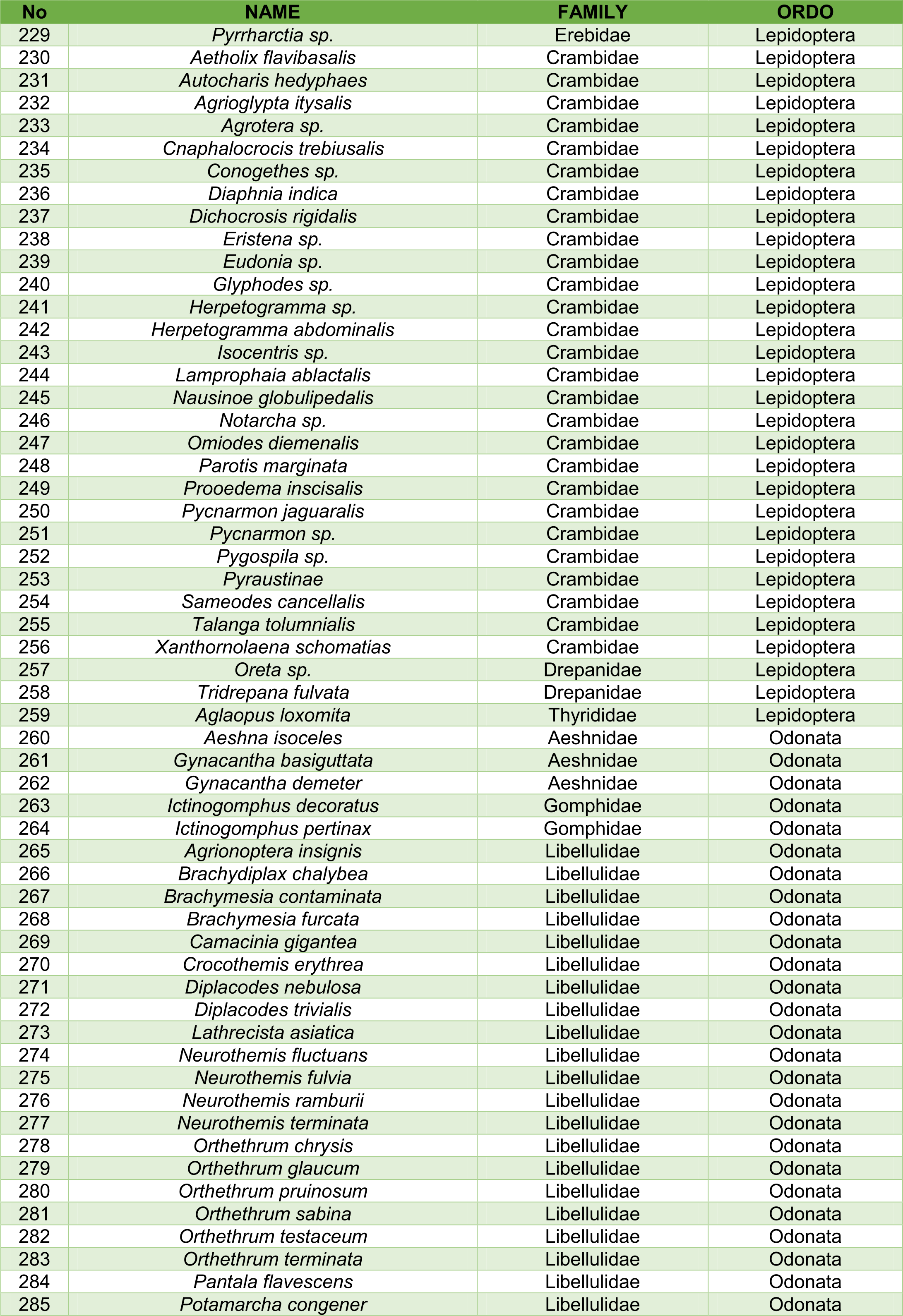
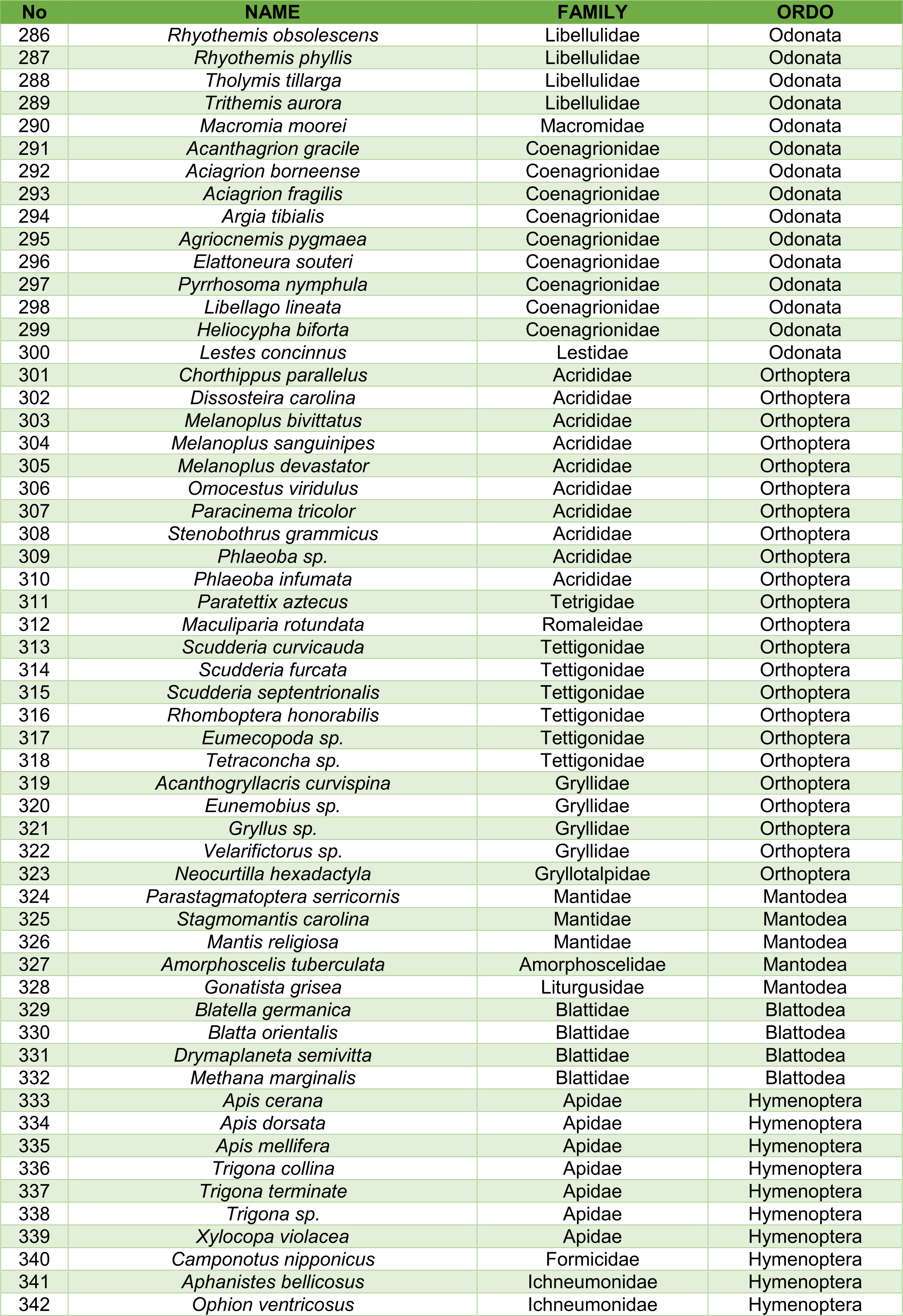
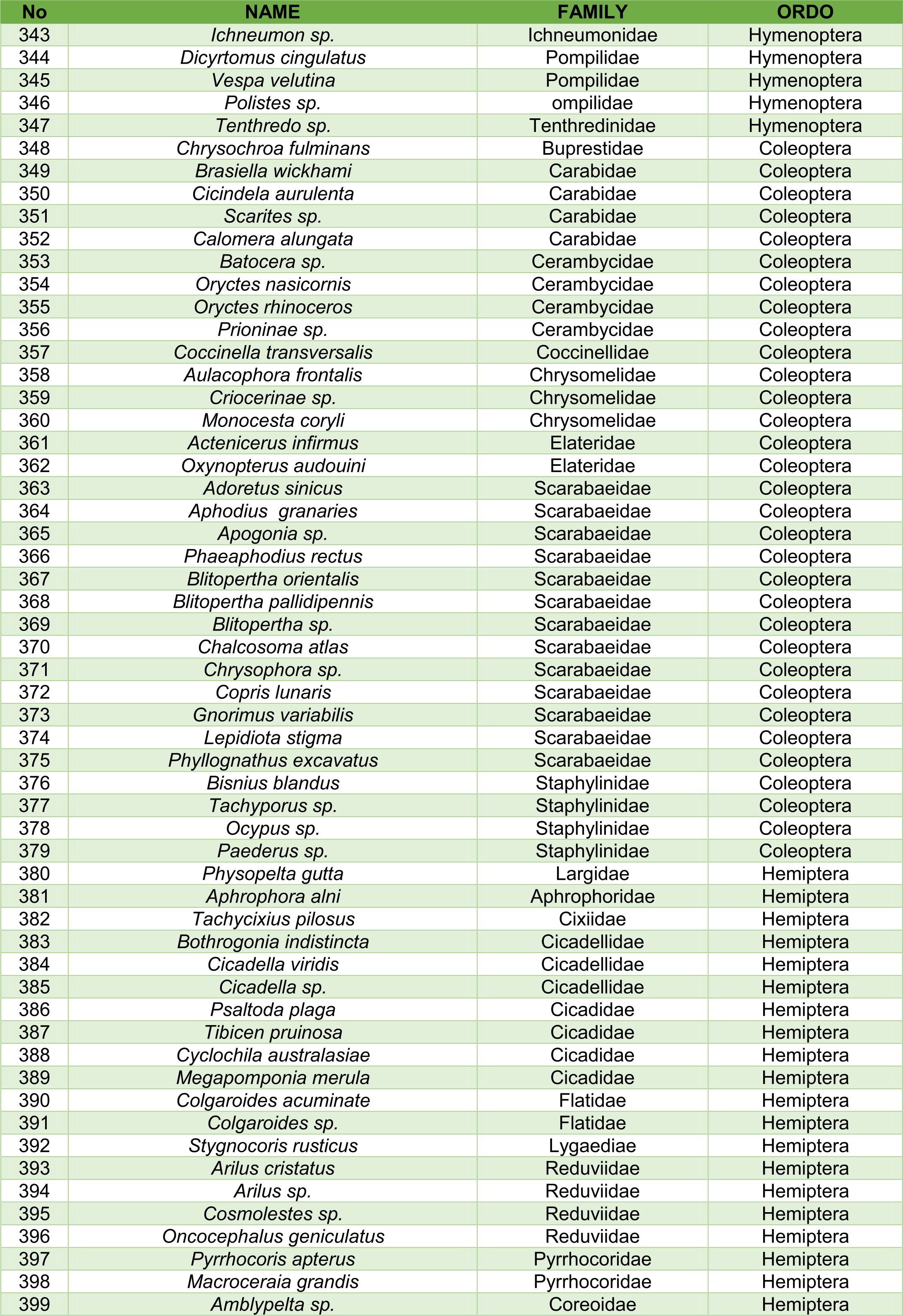
Insects
Insects are arthropod with chitinous exoskeleton, a three-part body (head, thorax and abdomen), three pairs of jointed legs, compound eyes and one pair of antennae. Insects are the world’s most diverse group of animals, making up more than 58% of the known global biodiversity. Considerable debate continues over how many species of insects there are in the world, which estimated that globally there are approximately 1.5 million, 5.5 million, and 7 million species of beetles, insects, and terrestrial arthropods, respectively They inhabit all habitat types and play major roles in the function and stability of terrestrial and aquatic ecosystems.
Insects are closely associated with human lives. Many insects are considered to be pests by humans. However, Insects provide useful services to mankind and the environment for numerous reasons. Insects are important because of their diversity, ecological role, influence on agriculture, human food & health, and natural resources. They have been used in landmark studies in biomechanics, climate change, developmental biology, ecology, evolution, genetics, paleolimnology, and physiology.
Insects are excellent indicators of ecosystem health. The numbers of species and kinds of species of insects can tell scientists if a particular ecosystem is healthy or disturbed. it is urgently needed to explore and describe insect biodiversity and to better understand the biology and ecology of insects if ecosystems are to be managed sustainably and if the effect of global environment change is to be mitigated.
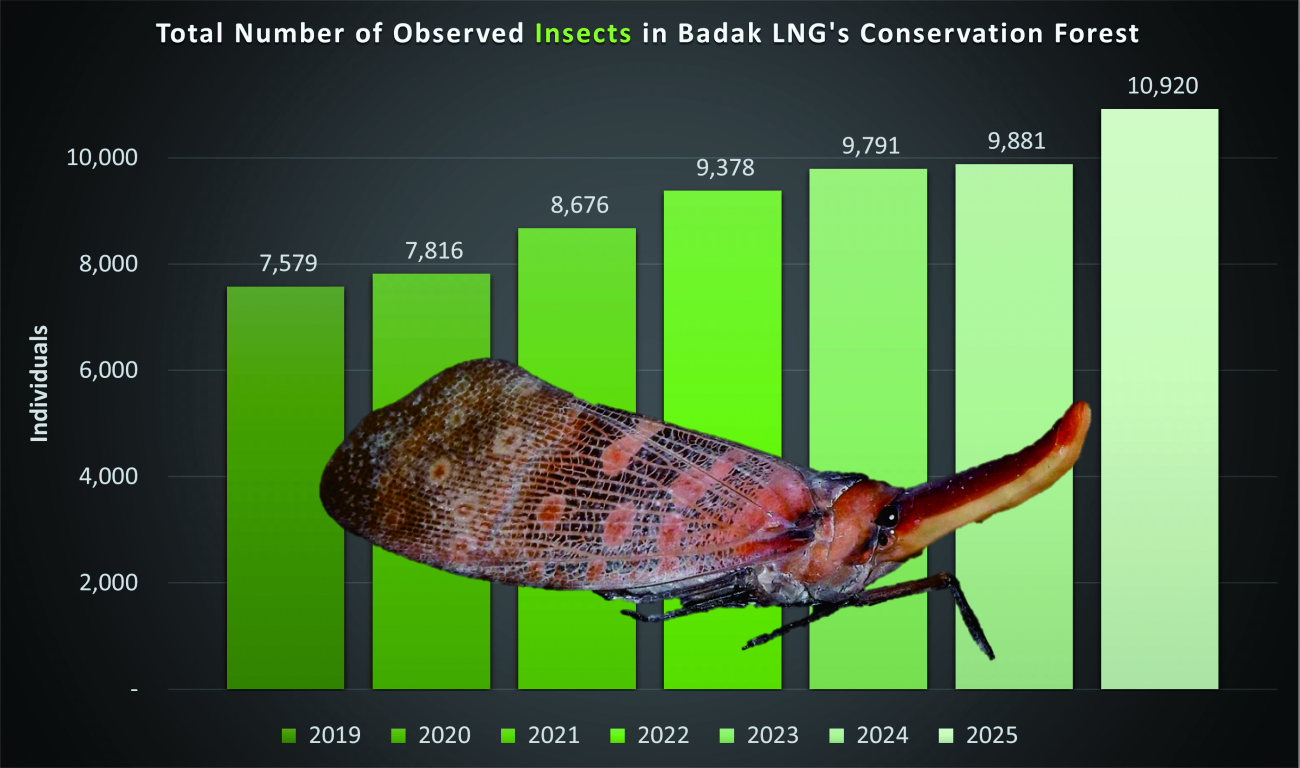
Insect Population Trend
Figure below is the trend of insects in Badak LNG's conservation forest:

Figure below is the trend of insects in Badak LNG's conservation forest:
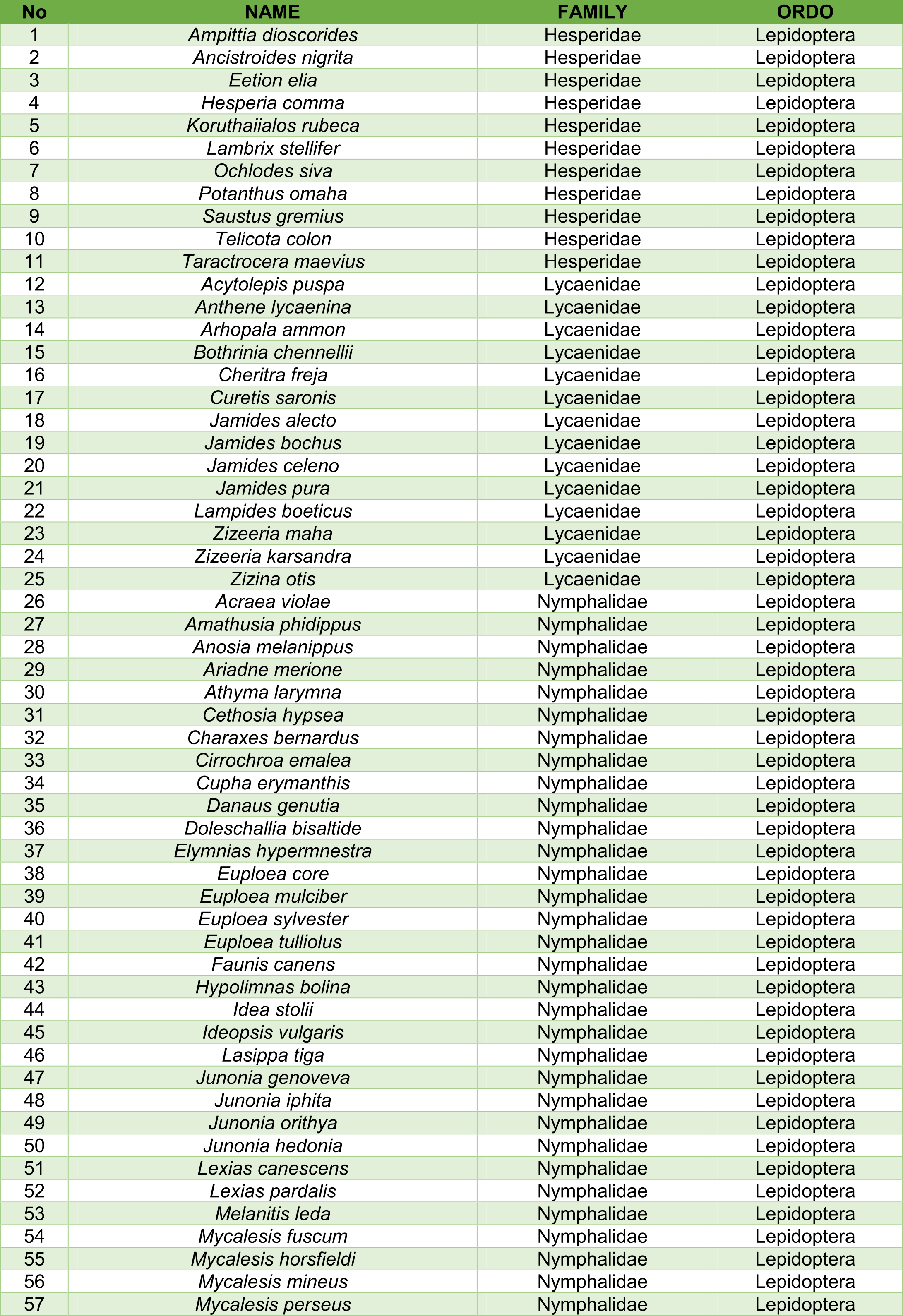
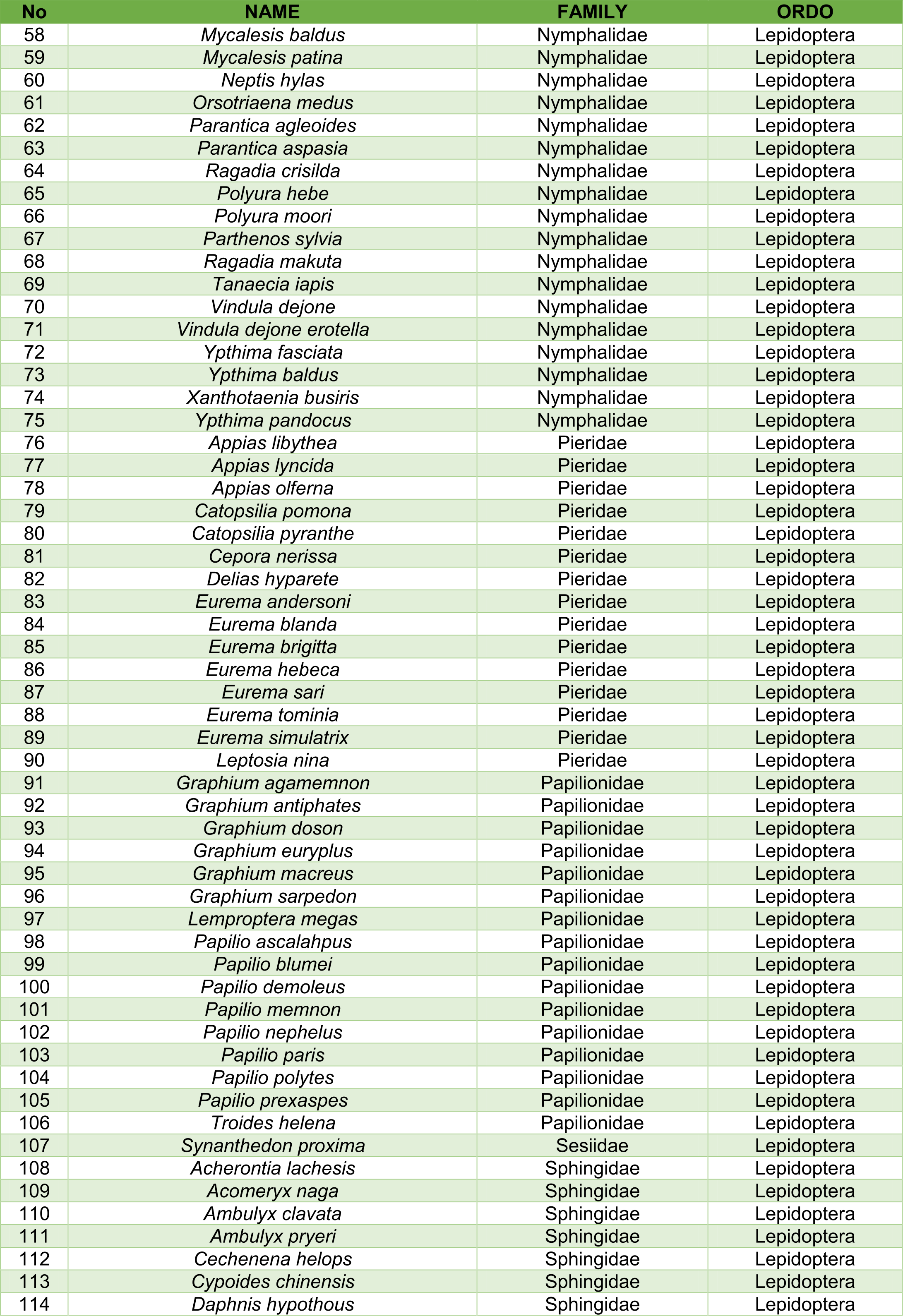
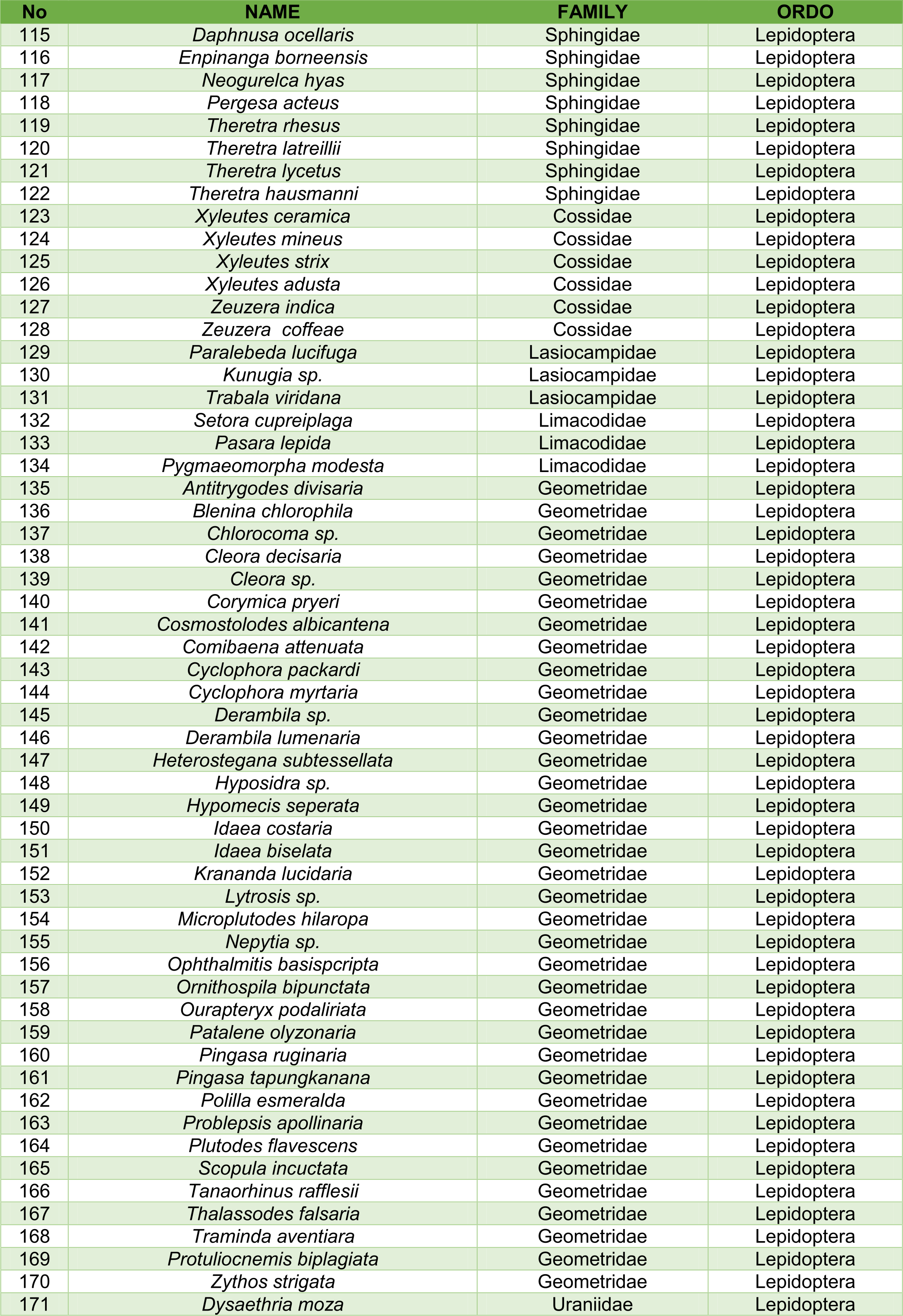
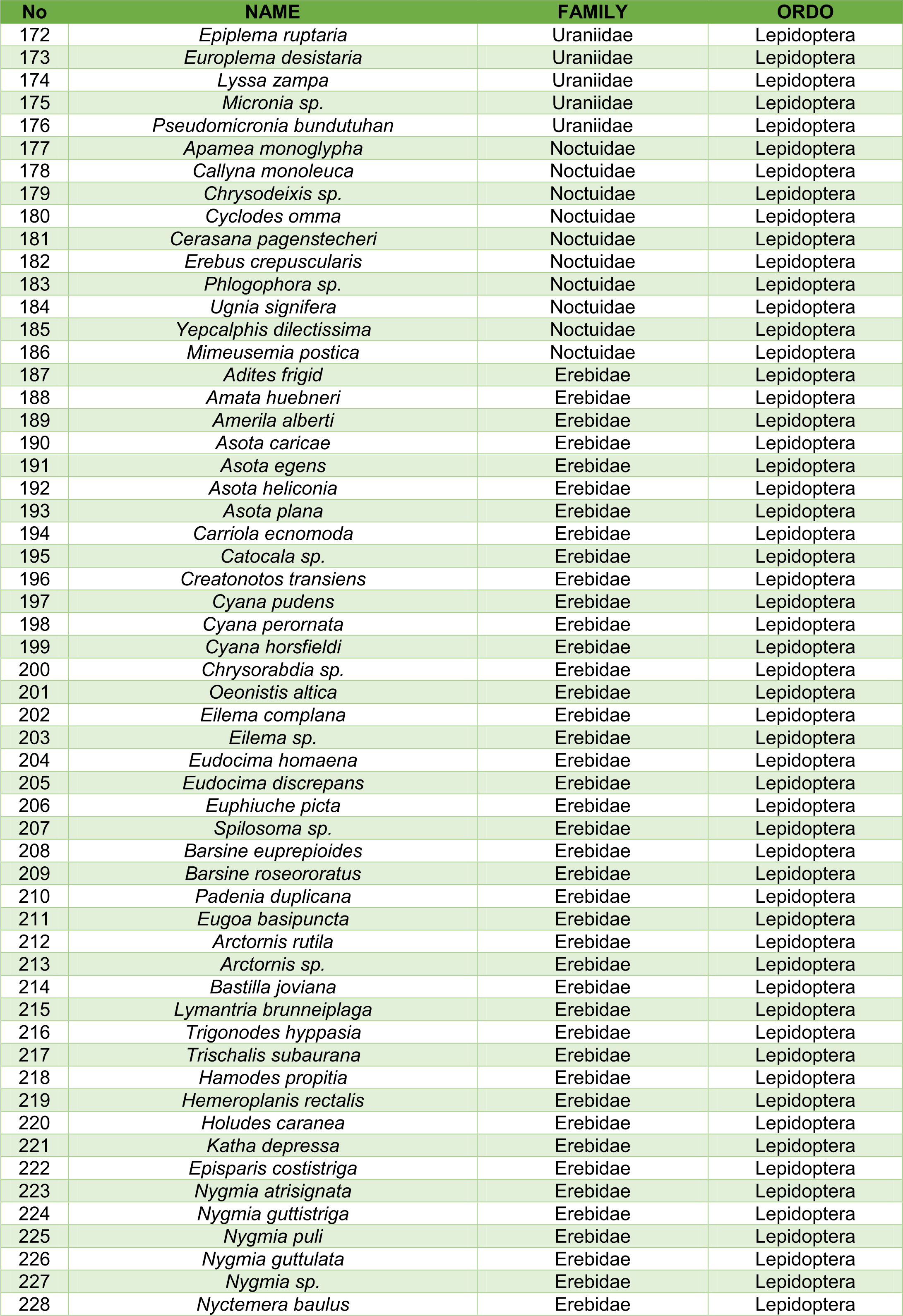
Insect Species Documentation
The following images document the wide variety of insect species recorded during systematic field surveys within Badak LNG's Conservation Forest.