Amphibians
Amphibians are important component in the food network of tropical forest because they are likely to be the main terrestrial insectivores (Utama, 2003). According to Iskandar (1998), around 4,100 species of frogs and toads are recorded in the Anura tribe. Whereas Naming and Das (2004) estimated 155 species of amphibians in Kalimantan and most of the amphibians living in East Kalimantan inhabit forest areas and less diverse in rice fields, plantations, irrigation and settlements.
Amphibians are a good biological indicator of environmental quality in an area such as fragmented tropical forest. Amphibians are animals that are very dependent on humidity and the presence of water (in rivers & ponds) with good condition.
The types of amphibians found in the vicinity of the conservation forest and natural forests of Badak LNG are common and generally inhabit open areas and other coastal areas. Several types of amphibians that can be identified in this region consist of 4 families: Ranidae, Bufonidae, Rhacophoridae and Dicroglossidae.
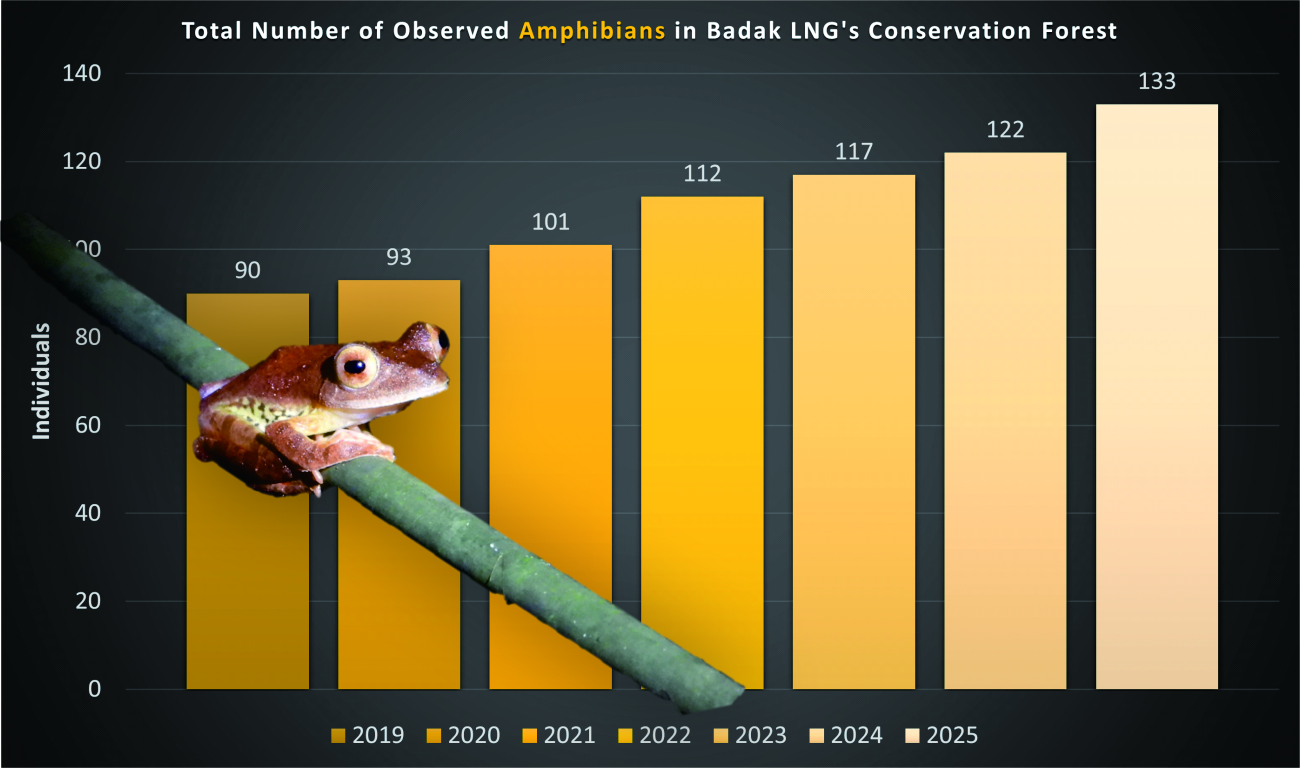
Amphibian Population Trend
Figure below is the trend of amphibians in Badak LNG's conservation forest:

Amphibian Species Documentation
A variety of amphibian species has been documented through systematic field observations and nocturnal surveys within Badak LNG's Conservation Forest.
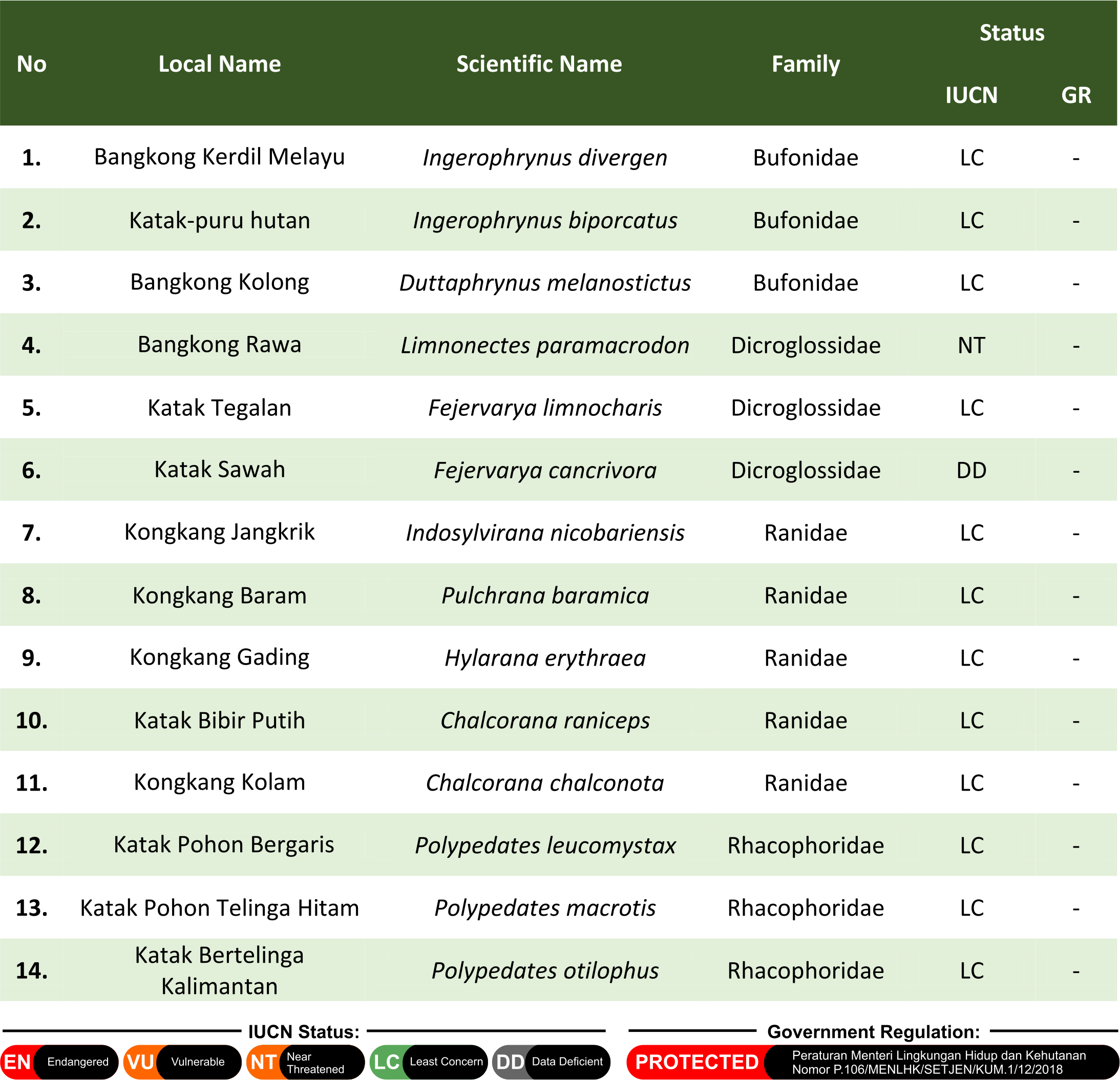
Complete Species List
The following table presents the complete list of amphibian species recorded in Badak LNG's Conservation Forest, including taxonomic classification, conservation status, and local names.