Reptiles
Reptiles are cold-blooded vertebral animals with scaly body parts and using lungs for respiration. The existence of reptiles in the forest area can be used as an indicator or provide an early warning of the current environmental changes. Because of some types of reptiles that have a narrow and limited distribution are only found in specific habitats, a loss of certain population indicates a change in environmental quality even though the process may not be too noticeable. Reptiles are one of the predators from the herpetofauna components that comprise ecosystems and are part of biodiversity, thus reptiles have the same important role along with other components in an ecosystem by giving a part in a food chain to maintain the sustainibility. In addition, reptiles provide ecological services for humans, among others, as biological pest control, especially for insects and rats.
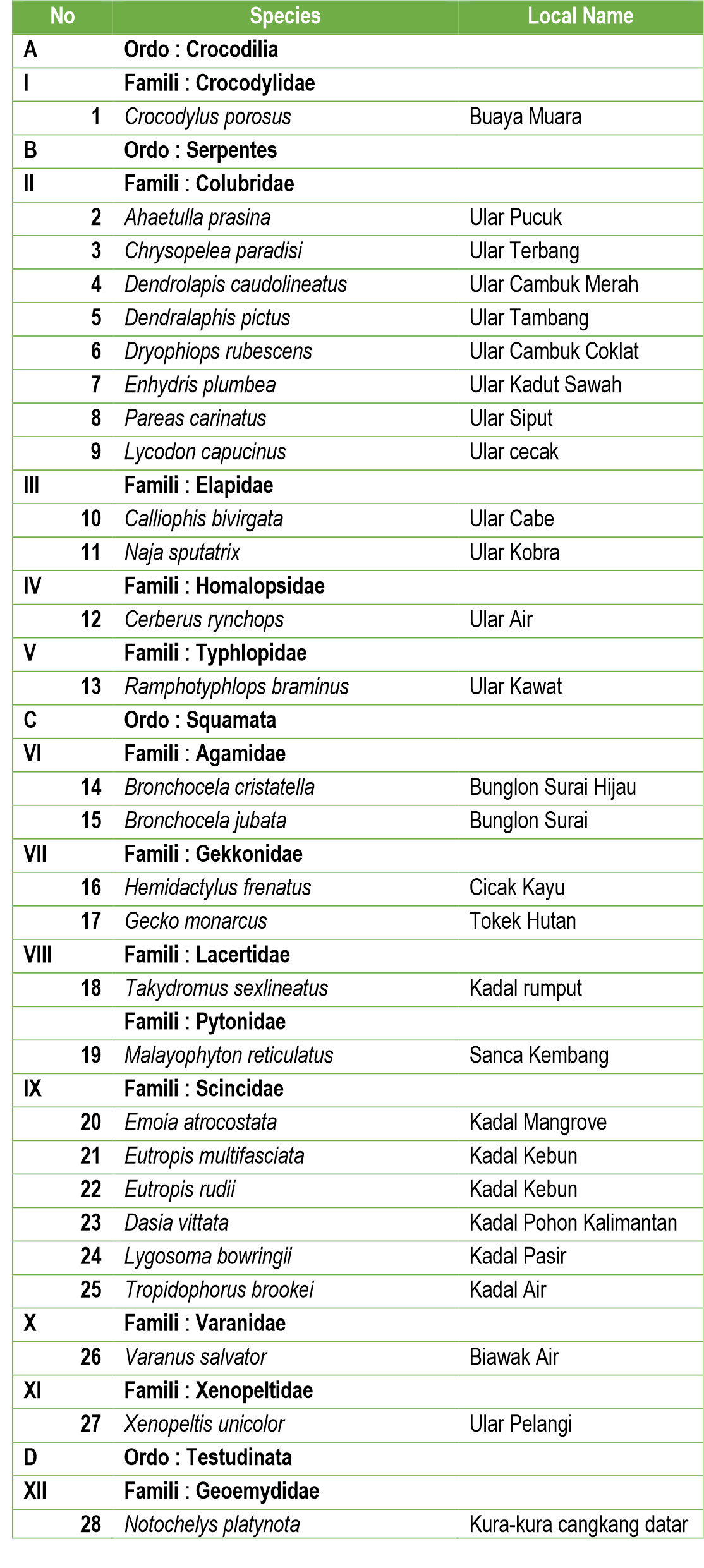
The types of reptiles found in the vicinity of the conservation forest of Badak LNG are common species and inhabit open areas or other coastal areas. Several families of reptiles that can be identified in this region consist of: Crocodylidae, Colubridae, Elapidae, Homalopsidae, Typhlopidae, Agamidae, Gekkonidae, Pythonidae, Scincidae, Varanidae, and Geoemydidae.
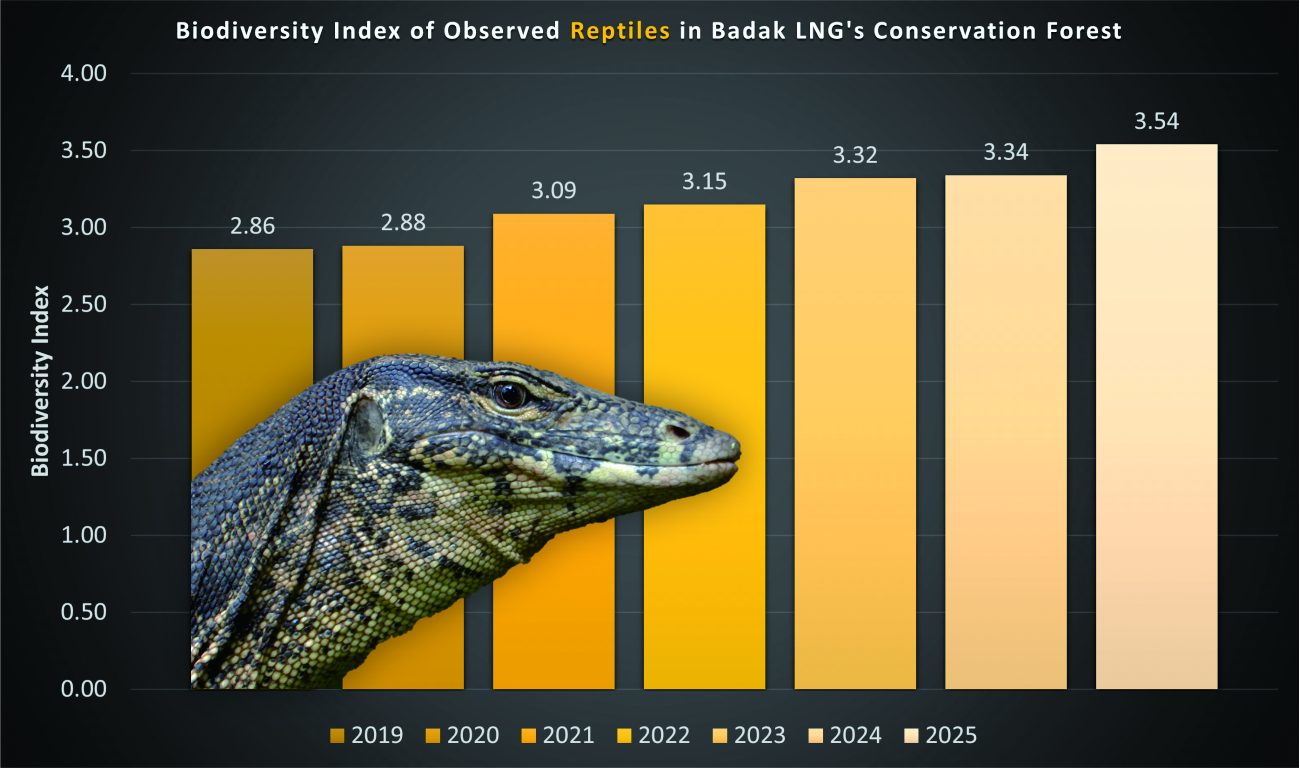
Reptile Population Trend
Figure below is the trend of reptiles in Badak LNG's conservation forest:

Reptile Species Documentation
A variety of reptile species has been documented through systematic field observations and camera-trap monitoring within Badak LNG's Conservation Forest.
Complete Species List
The following table presents the complete list of reptile species recorded in Badak LNG's Conservation Forest, including taxonomic classification, conservation status, and local names.